
Most people write such poor resumes that they get turned down. You spend a lot of time worrying about your resume. You change the font, the margins, and utilize a nice template you got on Etsy. You hit “Apply” on fifty jobs, and then what? No sound.
Not a thing. No email, no call, just the sound of your own worry. This is the hard truth that most career blogs won’t tell you: No one is looking at your résumé. At least not at first.
A recruiter looks at a resume for an average of 6 to 7 seconds before deciding whether to hire someone or not. That’s all. You don’t have time to be vague. You don’t have time to “promise.” You have to hit them in the face with value as soon as they open that PDF.
If you’re sick of ghosting, here’s how to write a resume that gets you in the door.
1. Beat the Robot (ATS)
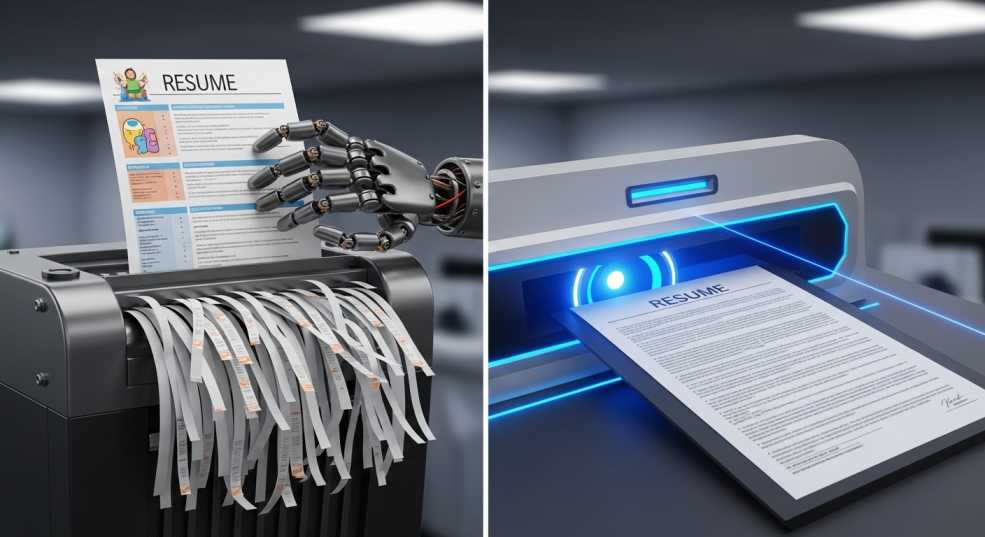
An Applicant Tracking System (ATS) scans your name before a person even sees it. You can’t see this bot if you don’t pass it.
Stop using those “creative” two-column templates that have pictures, icons, and skill bars (you know, the ones that say “80% proficiency in Photoshop”). The ATS doesn’t like them. It can’t read the text in the columns correctly, so it thinks your information is nonsense.
The Fix:
- Don’t make it interesting. A standard, one-column layout is the best thing for you.
- Use normal headings. Don’t be cute and say “My Journey” instead of “Experience.” The bot is looking for “Experience.”
- The type of file is important. Always send a PDF unless they ask for a Word doc. It keeps your formatting in place. But make sure it’s a PDF with text in it, not an image that was saved as a PDF.
Similar More: How to Find Your Dream Career in 2026
2. Statement
If your resume starts with “Objective: A hard-working person looking for a challenging role to use my skills…”
Take it away. Now.
Recruiters know you’re looking for work. That’s why you sent in your application. This sentence is empty. It takes up the most valuable space on the page, which is the top 25%.
Change it to a “Professional Summary.” This is like your elevator pitch. It should be two or three lines that tell who you are and what you’ve done.
- Bad: “Searching for a job in marketing.”
- Good: “Digital Marketing Specialist with more than five years of experience managing ad budgets of $50,000 per month.” An expert in SEO who can boost organic traffic by 40% every year.
Do you see the difference? The second one tells me that you work for companies that make money.

3. Rule for Experience
This is where most people fail. They think of their “Experience” section as a job description.
- “Responsible for sales.”
- “Managed a team.”
- “Wrote reports.”
So what? Anyone can be “responsible” for sales and still be bad at it. Just saying what you do doesn’t mean you’re good; it just means you showed up.
You need to use Achievement-Based Bullets now. Use the Google formula: “Did [X] as measured by [Y] by doing [Z].”
- Instead of: “In charge of customer service.”
- “Implemented a new ticketing system that cut the time it took to resolve customer complaints by 20%, which led to a 15% increase in client retention.”
The best weapon you have is numbers. Data is something that recruiters love. Did you save time? Save cash? Get paid? Put a number on it. If you don’t have exact numbers, make an educated guess. “Managed a team of 10” is better than just “Managed a team.” “Handled calls” is not as good as “Handled 50+ calls a day.”
4. Don’t List “Hard Worker”
All the time, I see resumes that list “soft skills,” such as:
- Communication
- Leadership
- Team Player
- Problem Solver
On a list, these don’t mean anything. Everyone says they work hard. You show these skills in your bullet points, not in a list.
The “Skills” section is only for hard skills.
- Software: Python, SQL, Salesforce, Jira, Excel (Pivot Tables, VLOOKUP).
- Languages: Spanish (Fluent), French (Intermediate).
- Certifications: PMP, Google Analytics, AWS Certified.
These are the words that the ATS is looking for. If the job description says “Must know Jira” and “Jira” isn’t in your skills section, you won’t get the job.
5. Gap
People get really upset about gaps in their work history. “I took six months off to travel, care for a sick parent, or figure out my life.” “Am I not hireable?”
No. But don’t try to hide it. If you use a “Functional Resume” to hide a gap by grouping skills instead of listing jobs in order of when you did them, recruiters will see it right away. It seems fishy.
Stay in chronological order. You can add a short line to your LinkedIn or cover letter if the gap is new and big (more than a year). What if it was five years ago? Nobody cares. If it happened during the pandemic (2020–2021)? Everyone gets a free pass for that.
6. Length: One Page? Two Pages?
Here is the rule of thumb:
- One page for less than 5–7 years of experience. End of story. You don’t have enough relevant history to fill two pages. Stop talking nonsense.
- Two pages is fine if you have more than ten years of experience. But putting important things on page 2 is dangerous.
Others: Resume कैसे बनाएं: एक ऐसा CV जो आपको नौकरी दिलाए, कूड़ेदान में न जाए
7. Proofread. Then Proofread Again.
The first line of a resume for a “Detail-Oriented Accountant” I saw once misspelled the word “Finance.”
Do you know where that resume went?
Misspelled words make you look lazy. Read your resume from the bottom up. It makes your brain look at each word one at a time. Or even better, have a friend who is picky about grammar read it.
This change in thinking makes all the difference. It’s not about you on your resume. It is not a life story.
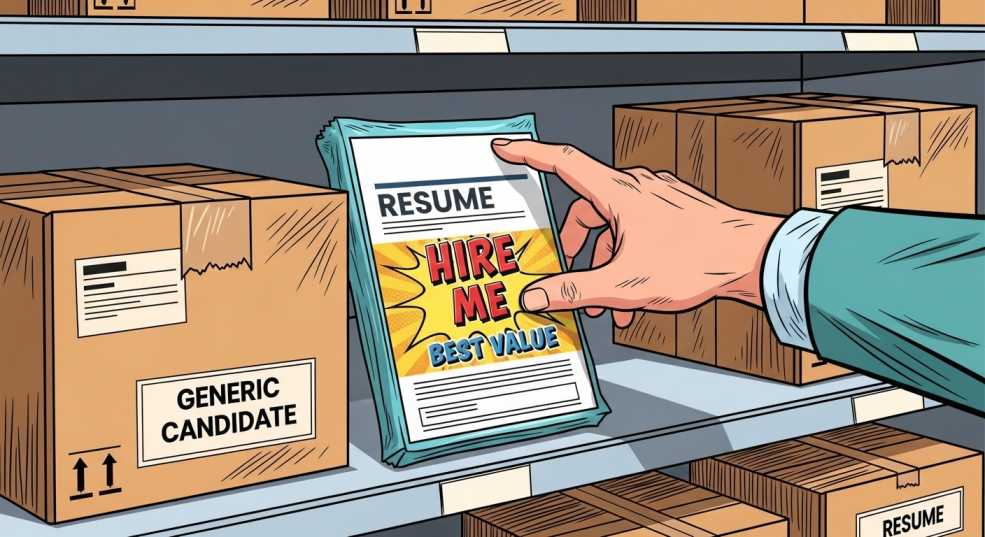
It is a marketing tool that tries to get a company to buy a product (you). The buyer needs to be able to answer one question with every word on that page:
“Will this person be able to help me?”
Take out any bullet points that don’t answer that. If a hobby doesn’t answer that, get rid of it. People don’t care that you like to hike unless you’re applying to REI.
Final Thoughts
Stop trying to be “perfect.” Start working to be useful. Make your resume fit the job description, use numbers, and keep it neat. That’s how you get the job.
FAQs
Q: Do I really have to get rid of my picture? I paid for a professional picture of my head.
A: Yes, get rid of it. The picture harms you unless you’re seeking for a modeling job or a position in Europe or Asia where it’s against the law. In the US and Canada, it opens the door to bias (ageism, racism, lookism). Also, the ATS bots often have trouble with pictures and mess up your text. Use the headshot for your LinkedIn profile.
Q: I don’t have any “hard numbers” for my job. I was merely a front desk clerk. What should I do?
A: You do have numbers; you just aren’t looking for them. How many calls did you get each day? 50? 100? Did you keep track of the schedules for three executives or just one? Did you plan the party for 200 people during the holidays? “Managed a 10-line phone system handling 100+ daily calls” sounds a lot better than “Answered phones.” If you have to, guess, but don’t leave it blank.
Q: Is it possible to mislead the ATS by hiding keywords in white text?
A: No. That is a TikTok myth that will get you kicked off. Now the bots are smarter. They can see the concealed text, and when the recruiter changes the view to “plain text,” they will see a huge block of spam words. It seems like you’re trying too hard and not being honest. Simply include the keywords in your skills section in a way that makes sense.
Q: My “hobbies” prove that I’m a well-rounded person. Why do you want to cut them?
A: Because the person in charge of hiring has a headache and 500 resumes to read. They don’t care that you enjoy knitting or trekking. They want to know if you can accomplish the work. The only time you can include a hobby is if it has something to do with the job (like “coding mods for video games” for a developer role) or if it displays an incredible level of discipline (like “Ironman Finisher”). If not, use that space for more bullet points.
Q: Do I really have to change my CV for every job I apply for?
A:You don’t have to redo the whole text, but you do need to change the top 20%. Check out the job listing. Don’t send a résumé that says “Customer Service” if they call it “Client Success.” Change the terms so they fit their language. It only takes two minutes and makes it twice as likely that you’ll pass the bot.
Q: Is it really okay to have a two-page resume? I heard that it’s a sin.
A: It’s not a sin, but you don’t normally need to do it. If you’ve worked in the field for more than ten years, write two pages. But if you recently graduated or have three years of experience, you’re just talking nonsense. You aren’t being clear enough if you can’t communicate your narrative in one page. Stop talking about high school. Take out the 2018 internship that has nothing to do with this job.