
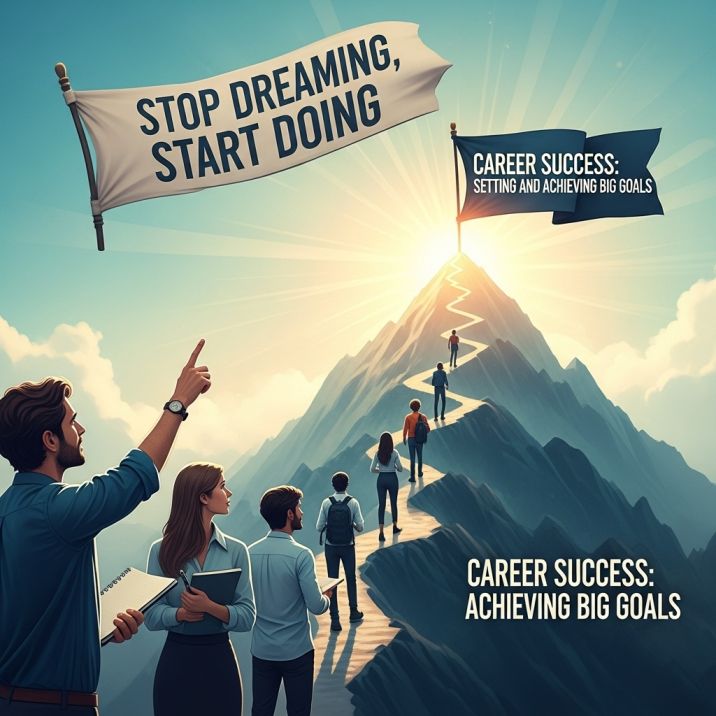
We all have that one friend. You know the one. They always have a “new exciting idea” when you go out for drinks with them. “I’m going to make a podcast.” “I am going to write a book.” “I’m going to leave my job and start my own business.” You see them again six months later. You ask, “How’s the podcast?” “Oh, I got busy.” But hey, I’m thinking about getting into real estate now.”
A lot of people love the feeling of setting goals, but they hate the work that goes into reaching them. Telling people about your big plan makes dopamine flow. It feels good. It seems like you’ve already done something. But actually getting up at 5 AM to write the script or look at the market? That doesn’t feel right. That hurts like hell.
Stop making “New Year’s Resolutions” and start making a battle plan if you’re sick of being the person with “potential” and want to be the person with “results.”
You don’t get lucky when you have a successful career. It’s about making a plan to get from where you are to where you want to be and then having the courage to follow through with it even when things get tough.
This is the honest truth about making big goals and then reaching them.

1. If It Doesn’t Scare You, It’s Too Small
Setting goals is no longer possible because of corporate culture. HR tells you to set “SMART” goals, which means they should be clear, measurable, doable, realistic, and have a deadline.
The “R” (Realistic) is the problem. “Realistic” means “not very good.” “Realistic” keeps you safe. “I want to boost sales by 5% this year.” Yawn. That’s not a goal; that’s just being there.
Your goal should make you feel sick if you want to be very successful in your career. You should ask yourself, “Who am I to do this?”
- Don’t try to get a promotion; try to get to the C-Suite.
- Instead of writing a blog, try to write a bestseller.
When you set a big, “unrealistic” goal, your brain changes how it works. It stops looking for small changes and starts looking for big ones.
Similar More: Career Growth Without Becoming a Manager
2. Reverse Engineer Your Life
Planning ahead is what most people do. “Okay, I’ll work here for two years and then see what happens.” This is what it’s like to wake up at 45 and wonder how you got to be a middle manager.
Change the story. Plan in reverse. Think about what life will be like in ten years. You have done the “Big Thing.” Now, go back.
- If you want to be there in ten years, where do you need to be in five years?
- What skill do you need to learn this year to be there in five years?
- What do you need to do today to get better at that skill this year?
The “Big Goal” isn’t a mountain anymore all of a sudden. It’s only a list of things to do. You don’t want to “become a CTO.” This month, all you want to do is “Learn Cloud Architecture.” That can be done.

3. Motivation is a Liar; Discipline is Loyal
This is the hardest thing to take. You won’t feel like doing things every day. You won’t feel motivated most days, in fact.
You will be tired when you get home. The kids will be yelling. The Netflix show will be calling out to you. Motivation is like that friend who is fun to hang out with but disappears when you need help moving a couch. Discipline is the friend who shows up with a truck at 6 AM like they said they would.
Don’t wait until you “feel like it.” Writers who make a living don’t wait for ideas; they write. Athletes don’t wait until they feel good; they train. Make a schedule that takes “choice” out of the equation.
- “I write for half an hour before breakfast.” (Not “I’ll write if I have time”).
- “I send five emails every Tuesday to network.”
When the habit is automatic, you don’t need willpower.
4. Silence Strategy
Don’t tell people what you want to do. This is a strange psychological trick. (Except for one person who is responsible for you.)
When you tell everyone, “I’m going to run a marathon!” and they say, “Wow!” When someone says, “Good for you!” your brain gets a reward signal. It feels good, like you’ve already finished the race. This takes away your drive.
Don’t tell anyone your goals. Let your hunger grow inside you. The only reward should be the result itself. Do your best work in the dark so you can shine in the light. There is nothing more powerful than leaving for six months and coming back with a finished project while everyone else was just talking.

5. Plan B
“Plan B” is a backup plan. And safety nets slow you down. You won’t fight as hard if you know you can always go back to your old, comfortable job if this new business fails.
I’m not telling you to be careless. Don’t put your life savings on the line. But in your mind, you have to burn the boats. Say to yourself, “There’s no turning back.” I have to make this work, or I have to find a way to make it work. You get really creative when you have to find a way to make things work.
6. Embrace The Dip
Every big goal has a graph that looks like this.
- The Start: Excitement! A lot of energy!
- The Dip: A lot of work. No results. Questions. Issues.
- The Breakthrough: Winning.
The Dip is when most people give up. They make a YouTube channel, post five videos, and get no views, so they give up. They start a business, get turned down once, and then quit.
The filter is the Dip. It exists to get rid of people who don’t really want it. When you reach the wall and want to cry because it seems impossible, remember that “This is the Dip.” This is where the other teams give up. “I win if I keep going.” You can only win if you love the fight.
Others: Engineer के लिए सरकारी नौकरी, B.Tech की डिग्री रद्दी नहीं है, बस रास्ता सही चुनो
7. You Need a Tribe
You are the sum of the five people you spend the most time with. You will complain about your boss and wait for the weekend if all of your friends are doing the same.
You need to meet people who are running the same race as you. If you want to start your own business, spend time with other business owners. Join coding meetups if you want to work in tech. You need people who make “ambition” seem normal. Instead of “Did you see that viral video?” you need friends who ask, “So, what’s the next milestone?””
Final Thoughts
It’s not hard to reach big career goals. It’s just hard. It means being honest with yourself about what you want and then being tough with your time to get it. The year will go by no matter what. You can spend it wishing things were different, or you can spend it making the life you really want.
FAQs
Q: My boss makes me set “SMART” goals. Should I just ignore them?
A: No, you play the game. To keep your boss happy and get your bonus, set SMART goals for your 9-to-5 job. But don’t make those your goals. Your own career goals should be huge and scary. Keep a different notebook for the real goal. The SMART goals are just to make sure you can pay your bills while you build your empire.
Q: “Burn the boats” sounds cool, but I have a house payment. Is that really good advice?
A: “Burning the boats” is a way of thinking, not a way to kill yourself financially. Don’t quit your job tomorrow if you don’t have any money saved up. That’s just crazy. Burning the boats means taking away the mental escape route of “I’ll just try this for a month and see.” It means you agree to the result, even if it takes longer than you thought. Don’t make excuses; just keep your day job.
Q: How can I tell if I’m in “The Dip” or just failing?
A: That’s a good question. The Dip is when the process is hard but the data is slowly going up (or at least staying the same). Failure (or a dead end) is when you work harder but get worse results. If you’ve been grinding for a year and haven’t learned anything new or seen a single win, you’re not in a Dip; you’re at a dead end. Turn.
Q: Is it okay to tell someone my goals? My partner?
A: Yes, but be careful. Tell people who will hold you accountable, not just people who will cheer for you. You get cheap dopamine when you tell a friend, “That’s amazing! You’re so smart!” Accountability means that if you tell a mentor, “Okay, show me the first draft by Friday,” they will hold you to it. Tell only the people who will call you out if you don’t work hard.
Q: I’m 40. Is it too late to “reverse engineer” a plan for the next ten years?
A: You’re going to be 50 anyway. Would you rather be 50 and stuck in the same place, or 50 and doing great? It wasn’t until Colonel Sanders was 62 that he started franchising KFC. Vera Wang started working in fashion when she was 40. You’re not dead yet. You still have at least two “10-year lives” to live. Use them.