

You don’t know anything at 20, but you have a lot of energy. At 30, you’re working hard to show that you belong. But what about when you’re 40? At 40, you sit in a conference room on a Tuesday morning and look around. You stare at the PowerPoint presentation you’ve seen a thousand times and think, “Is this it?” Is this how my life will be from now on? This is a scary thought. You know you have about 20 to 25 years of work left. It’s a long time to be unhappy. But it also takes a long time to make something new.
Society tells us that we should be “settled” by the time we turn 40. We should have a steady paycheck, a corner office, and a clear path to retirement. Now it feels dangerous to change lanes. It seems like I’m throwing away 20 years of hard work to start over.
But here’s the truth that no one tells you: your 40s are the best time to change. You aren’t starting over; you’re starting from what you’ve learned.
This guide is for you if you are lying in bed at 3 AM and wondering how to get out of your current job without ruining your life. No fluff, no business talk. Just the truth about how to do this.

1. Sunk Cost Trap, Get Over It
Your kids and your mortgage aren’t the biggest things holding you back. It’s your past and your ego.
The “Sunk Cost Fallacy” is what psychologists call it. You think, “I worked hard for 15 years to become a lawyer.” I would have wasted those 15 years if I quit now.
No, they weren’t. You learned things during those 15 years. They taught you how to deal with high-pressure clients, read complicated documents, negotiate, and deal with office politics.
You don’t lose those skills if you switch to being a landscape architect or a manager of a non-profit. You bring them with you. You are not a “junior” worker. You are a senior professional who is learning a new skill. There is a huge difference.
Similar More: How to Change Careers in Your 30s
2. Elephant in the Room
Let’s talk about the scary part. Yes, there is ageism. If you want to get a job in Tech or Marketing, you might have to talk to a 26-year-old in a hoodie who thinks “email” is old technology.
You can’t beat them in “hustle” or “willingness to work for peanuts.” But you can beat them in Soft Skills (I hate that word; let’s call it Wisdom).
This is what you have that a 25-year-old doesn’t:
- Emotional intelligence means you know when to talk and when to be quiet.
- Resilience: You’ve made it through bad bosses, recessions, and failures. You don’t freak out when the WiFi goes out.
- Problem Solving: You know that most “emergencies” aren’t really emergencies.
Don’t try to look young when you go for an interview. Don’t use slang that you don’t know what it means. Embrace your age. Promote yourself as the “adult in the room.” Businesses are desperate for people who will show up on time and do their jobs without causing problems.

3. Golden Handcuffs Problem
This is the real problem. You could eat instant noodles and sleep on the floor when you were 22. If you’re 40, you probably have a mortgage, car payments, and maybe even tuition to pay for. You might also have to take care of your aging parents. You need a certain amount of money coming in to support your way of life.
You probably can’t afford to do an unpaid internship.
The Plan: The Bridge Job Don’t quit your job right now. That’s killing yourself. Look for a “Bridge Job” instead. This is a job that uses your current skills but gets you closer to your new field.
- You are a tired accountant who wants to get fit.
- Don’t: Quit your job to work as a generic gym trainer for minimum wage.
- Do: Look for a job as a Finance Manager at a big gym chain or a company that sells sports equipment.
You can network, learn the language of the business, and make your move to the next level once you’re inside. Use the money you made in your old job to pay for your new one.
4. Resume
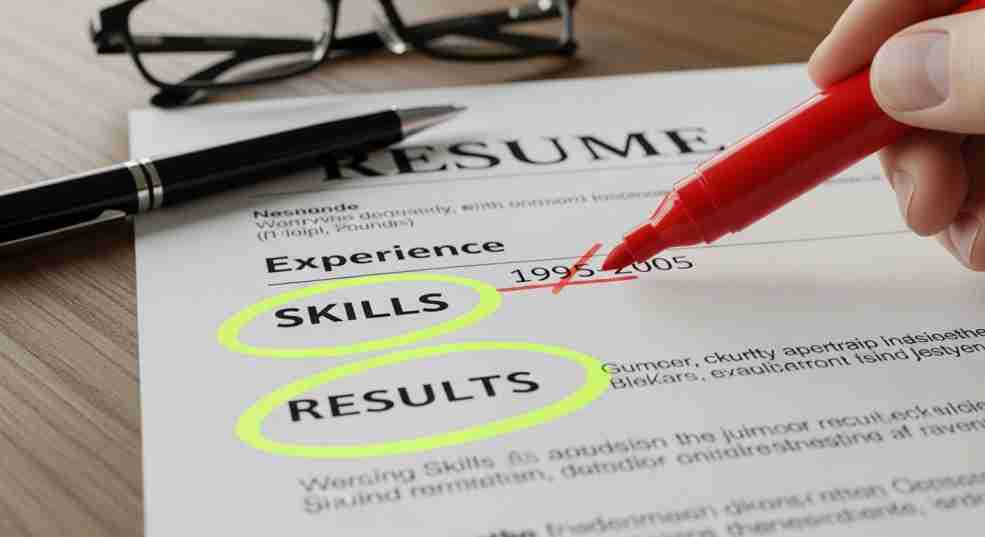
Your resume needs to be updated if you decide to take the leap. Listing your graduation year as 1996 or your first job at Blockbuster Video is a sure sign that you are old.
- The Rule: rule is to only go back 15 years. You can summarize or get rid of everything that came before that. No one cares what you did in 2002.
- Focus on Skills, Not Titles: Don’t just list your sales goals if you were a “Senior VP of Sales” and are applying for a Project Manager job. Focus on your skills instead. Write down how you led teams, set deadlines, and kept track of money. Those are the skills you can use in other jobs.
5. Who You Know
This is the best thing you have going for you over the younger generation. You have 20 years of connections. You have friends from college, old coworkers, neighbors, and people you met at weddings.
It’s hard to network when you’re 20 because no one knows anything. Your friends are the ones who make decisions when you turn 40. They are business owners, directors, and vice presidents.
It’s okay to ask for help. Send the email. “Hey [Name], I’m thinking about leaving [Current Industry] and I know you’ve been working in [New Industry] for a while. “Can I buy you a coffee and ask you some questions about it?”
You will be surprised at how many people want to help. Most people don’t like their jobs either, or they’ve made a similar change and love talking about it.
Others: Village Level सरकारी नौकरी, शहर की गुलामी छोड़ो, गांव के राजा बनो
6. Prepare for It
This is the most difficult part. You are used to knowing a lot. People come to you for help with questions. You start over as a rookie when you change jobs.
Your boss could be younger than you. A 23-year-old could fix a mistake you make. You might not have the corner office anymore.
You have to let go of your pride. You aren’t ready to change if you can’t handle not being the “boss.” But if you can give up your ego and be curious, you’ll feel a rush of energy you haven’t felt in years. The fountain of youth is learning.
Final Thoughts
When Colonel Sanders was 62 years old, he started franchising KFC. Vera Wang didn’t start working in fashion until she was 40. When Julia Child was 50, she wrote her first cookbook.
We live longer now. You still have 25 to 30 years of work to do after you retire at 65 or 70. That is a whole life. Do you really want to spend those 25 years complaining about your job, waiting for the weekend, and counting down the days until you can quit?
Or do you want to do something that makes you want to get out of bed for the rest of your life? The change will be hard. It will be frightening. There will be days when you wonder if you’re crazy. But what if you have to stay in a job you hate for another twenty years? That’s not just scary. That’s a sad thing.
FAQs
Q: Please be honest: Am I going to get less money?
A: Yes, probably. If you go from being a Director in Finance to being a Junior Graphic Designer, you won’t get the same pay. It’s just math. You need to think of it as an investment. You give up money for two years to be happy for the next twenty. If you really can’t afford to take a pay cut, look for the “Bridge Job” that the article talks about. You can stay in your field but change your job.
Q: Will it make me look bad to report to a boss who is 28 years old?
A: Only if you have an ego issue. Sure, that 28-year-old might know the software better than you do, but they don’t know how to deal with a crisis or a hard client like you do. They will hate you if you go in acting like a “know-it-all parent.” If you say, “Teach me the tech, and I’ll help you with the strategy,” they will see you as their secret weapon.
Q: Do I have to go back to school and get another degree?
A: Unless you want to be a doctor, lawyer, or architect? No. At 40, please don’t go $50,000 into debt. Portfolios are more important than papers in 2026. Get a certification in six months, work on a project, and use your current network to get in. In most fields, your 20 years of work experience is worth more than a new Master’s degree.
Q: How can I keep my age off my resume without lying?
A: You don’t lie; you just change things. Take off the dates of your graduation. Take off any jobs that were done before 2010. Listing a job from 1998 makes you look old right away. Think about the last 15 years. Recruiters don’t have a lot of time to read your whole life story; they just need to know if you can do the job right now.
Q: Isn’t it better to just wait until retirement?
A: Is it? It’s not good to be bored and expensive in this economy. If you’re just “coasting” in your 50s, you’re the first person to get laid off. Reinventing yourself now makes you safer because you can adapt to new situations. Staying still is the most dangerous thing you can do.