
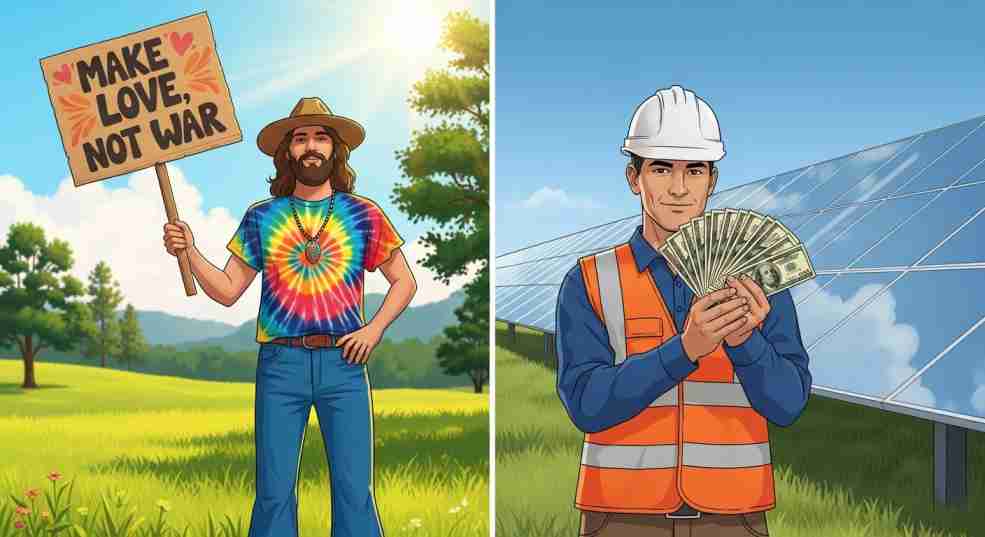
“Green Jobs” had a bad name for a long time. People thought you had to be an activist to do it. They thought you had to wear a hemp t-shirt, hate capitalism, and be willing to work for a “good cause” instead of a good paycheck.
If you still think that in 2026, you’re missing out on money. The “Green Economy” is no longer a charity. It is a monster worth trillions of dollars. The government is giving it a lot of money. Companies are scared of rules about climate change. And what about the cost of energy? Nobody wants to rely on oil from other countries anymore, that’s for sure.
What happened? The biggest hiring boom since the Tech boom of the early 2000s. The best part is that you don’t have to be a scientist. The Green Economy needs more than just people who can make solar panels. It also needs people who can put them up, sell them, pay for them, and run the projects.
If you want a job that won’t be affected by the economy, robots, or anything else, and that pays a lot of money, you should look into the Green Sector right now.
1. Blue Collar
We lied to the last generation the most when we said, “If you don’t go to college, you’ll be broke.” People with dirty hands are making the most money in the Green Economy.
We’re giving everything electricity. Cars, heaters, stoves, and factories. Who is going to do it? What is AI? No. ChatGPT can’t get up on the roof.
- Solar Installers: People who install solar panels: In many countries, this is the job that is growing the fastest. Yes, it is hard work. But what if you hire your own installation team? You are making money.
- Wind Turbine Technicians: Wind turbine technicians are the thrill-seekers of the trade world. You have to climb 300 feet to fix a turbine. The pay is huge because not many people are brave enough to do it.
- Electricians (The New Kings): An electrician with a license is needed for every EV charger, heat pump, and solar battery. They are fully booked for months. If you know how to fix things, don’t get a business degree; get an electrical license instead. You’ll be glad I did.
Similar More: Automation and Your Career: The Robots Are Here, But You Can Still Win
2. Green Jobs
Okay, so you like air conditioning better. I understand. People in business are worried about something called ESG (Environmental, Social, and Governance). In short, investors have said, “We won’t give you money if you pollute.”
Now, every bank, tech company, and big store needs a “Sustainability Team.”
- Carbon Accountants: Yes, this is real. Just like they keep track of how much money they make, businesses need to keep track of their carbon footprint. If you’re good with numbers and Excel, switch to this. It pays more than regular accounting work.
- Supply Chain Managers: Businesses need to show that the raw materials they use aren’t harming the rainforest. If you work in logistics, put “Sustainable Sourcing” on your resume. It will make you twice as valuable.
- Green Finance: Banks are giving out “Green Bonds” and “Sustainability Loans” as part of green finance. They need bankers who know a lot about energy markets. It’s Wall Street, but with a heart (and better public relations).

3. EV Revolution
The mechanic in your area is worried. There are no carburetors, spark plugs, or oil filters in electric vehicles (EVs). They are like computers on wheels. But this is a chance.
The world needs EV technicians badly. These people aren’t “grease monkeys”; they’re “high-voltage experts.” You should know how to deal with dangerous battery packs and fix software bugs. Dealerships are fighting over these people. This is your lane if you love cars but hate the oil stains.
4. Fixing Old Stuff
It’s cool to build new green buildings. But we need to fix millions of old buildings that leak and don’t work well. This is known as retrofitting.
- HVAC Experts: We’re taking out old gas boilers and putting in heat pumps instead. It takes a lot of planning and work.
- Insulation Experts: Experts in insulation say that making a building airtight saves more energy than a solar panel makes.
- Smart Building Managers: They use AI to turn off the lights and air conditioning, which saves the building 30% of its power.
This work isn’t very glamorous. There is a lot of dust. There is a lot of noise. But it is very important, and the contracts are backed by the government.
5. Skills Gap
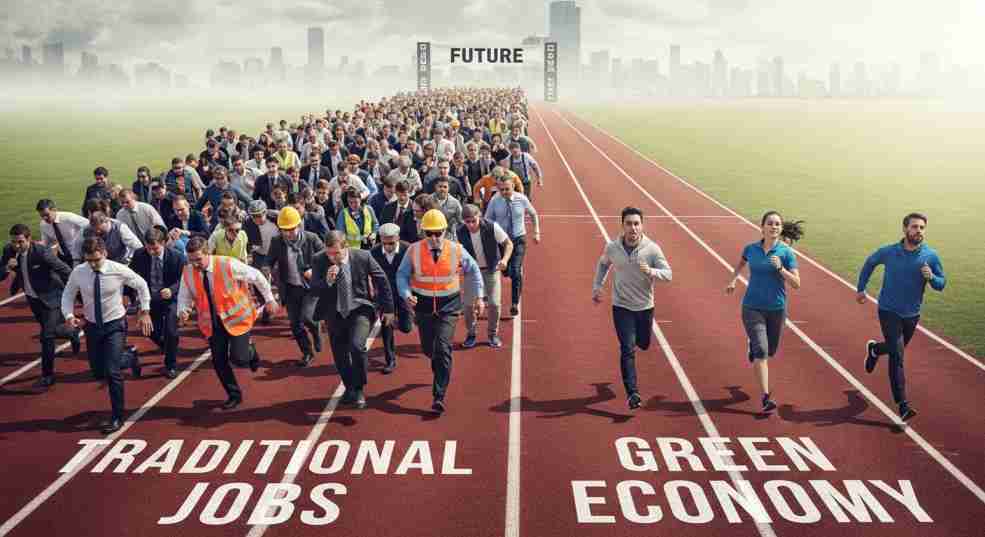
This is the secret weapon. No one knows what they are doing yet. There aren’t any “experts” in this field with 20 years of experience yet because it’s so new. You are a “Senior Expert” in Green Hydrogen if you have worked in the field for two years. You are a “Industry Leader” if you have worked in Carbon Capture for three years.
Now is the best time to get started. You’re not up against veterans. You are up against other beginners. How to Turn:
- Don’t give up your job. Just change the focus.
- If you work as a Project Manager in Construction, switch to Green Construction.
- If you are a lawyer, focus on environmental law.
- As a Marketing Manager, you should learn how to sell sustainability without “greenwashing.”
You don’t have to start over from scratch. You only need to use the skills you already have to solve a green problem.
Others: Latest Updates on Upcoming Govenment Exams 2026: UPSC, SSC CGL, IBPS, TET, IBPS, Railway
6. Is the Money Real?
Yes, in short. Long answer: Yes, because of supply and demand. There is a huge need for green talent. There isn’t enough supply because colleges take too long to change their courses.
When there aren’t enough jobs and there are a lot of people looking for work, salaries go up. In the past, a “Environmental Engineer” made an average salary. Now? They are setting their price. A “Sustainability Consultant” charges more per hour than a regular Management Consultant because their advice keeps the company from getting million-dollar fines.
Final Thoughts
The Green Sector is the only place where you can sleep soundly at night and wake up with a lot of money in the bank. It isn’t a trend. It’s a change. The whole world economy is getting a new wiring. You can either be the one who does the wiring or the one who watches it happen.
FAQs
Q: Do I really have to care about the environment to work in this field?
A: To be honest? No. You don’t have to be a vegan or drive a Prius. Most companies just want people who are good at their jobs and show up on time, even if they believe in the mission. No one asks you what you think about melting ice caps if you’re an electrician putting in EV chargers. They only want to know if the charger works. You can do it just for the money; the Earth will be saved either way.
Q: Is “Carbon Accounting” just a fake job for people who want to show off?
A: It seems like it, doesn’t it? But no. It is becoming a legal requirement. Companies in Europe and some parts of the US now have to report their emissions, just like they do their taxes. That means they need people who can figure out how much carbon there is. It’s boring, it’s full of red tape, and it pays very well because no one else knows how to do it yet.
Q: I’m 40. Is my body too old for “green collar” jobs like putting up solar panels?
A: If your knees hurt, you might want to stay off roofs. The Green Economy isn’t just about doing hard work, though. They really need Project Managers. They need people to sell the solar panels (Sales). They need people to give the projects the go-ahead (Admin). Use your “old” skills, like organizing and talking to people, to keep an eye on the young guys who are doing the hard work.
Q: Will these jobs go away if the government stops giving money?
A: Five years ago? Maybe. Today? No. In most places, solar and wind power are now cheaper than coal and gas without government help. The market has changed. Walmart and Amazon will still put solar panels on their roofs even if the government leaves tomorrow. This is because it saves them money. The train has gone.
Q: I work in the oil and gas industry. Will people hate me if I switch to green energy?
A: Not at all. You are a magical creature. Green companies love hiring people from the oil and gas industry because you know how to build big infrastructure projects. You know how to follow safety rules. You know a lot about complicated engineering. You are not a traitor; you are a “energy veteran” who is bringing adult supervision to a new industry.