
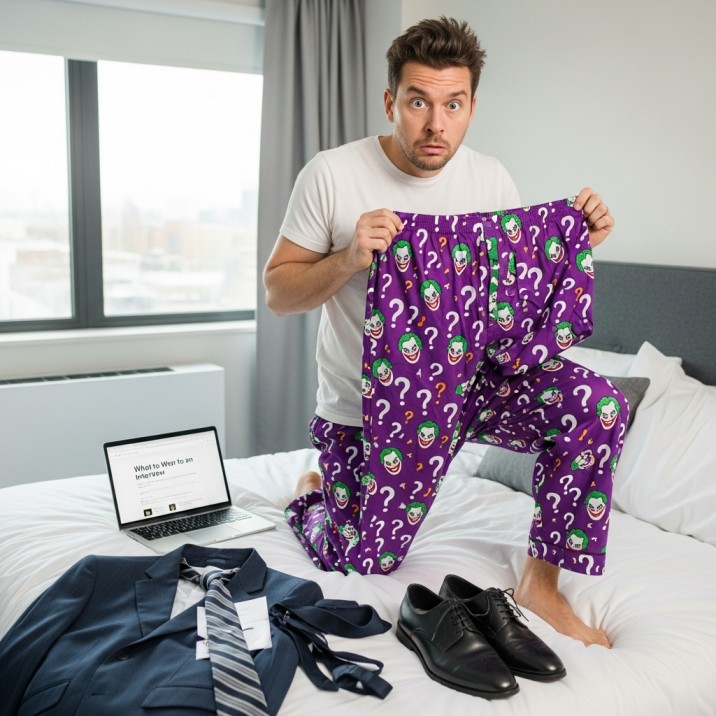
When everything was perfect, you made some changes to your resume (you probably lied a little about how good you were at Excel), you applied, and you got the email saying, “We’d like to interview you.” That’s great.
Then the fear sets in. You open your closet and see that you only have two choices: a hoodie with a pizza stain on it or a suit you bought four years ago for your cousin’s wedding that smells like mothballs.
This is the thing: The rules for how to dress for an interview are strange in 2026. If you wear a suit to a tech startup, they will think you are stiff and “don’t get the culture.” If you wear jeans to a bank, security will kick you out.
They look at your clothes first. Your clothes are already saying something about you before you even say “Hello.” You want them to say “Competent Professional,” not “I just woke up.”
This is the real guide on how to dress for a job interview so you don’t just get a confused look.
1. Do Your Homework
You need to be a detective before you even think about fabrics. If you don’t know who you’re meeting, you can’t dress right.
In an accounting firm, “business casual” means something completely different than it does in a graphic design agency.
How to figure it out:
- The Check of the Website: Visit their “About Us” page. Take a look at the pictures of the team. Are they wearing ties? Polos? T-shirts?
- Social Media: Look at their Instagram or LinkedIn. Look for posts that say “Life at [Company].” A three-piece suit is not a good idea if everyone is in shorts and playing ping pong.
- Ask the Recruiter: For real. Just ask. “Hey, I want to make sure I fit in. What’s the usual dress code for the office?” They will be happy that you asked.
Similar More: How to Write a Resume That Gets Interviews
2. Suit & Tie (Corporate, Law, Finance)
The old rules still apply if you’re interviewing at a big consulting firm, a bank, or a law firm. Tradition is what keeps these industries going. They want to see that you can do the job.
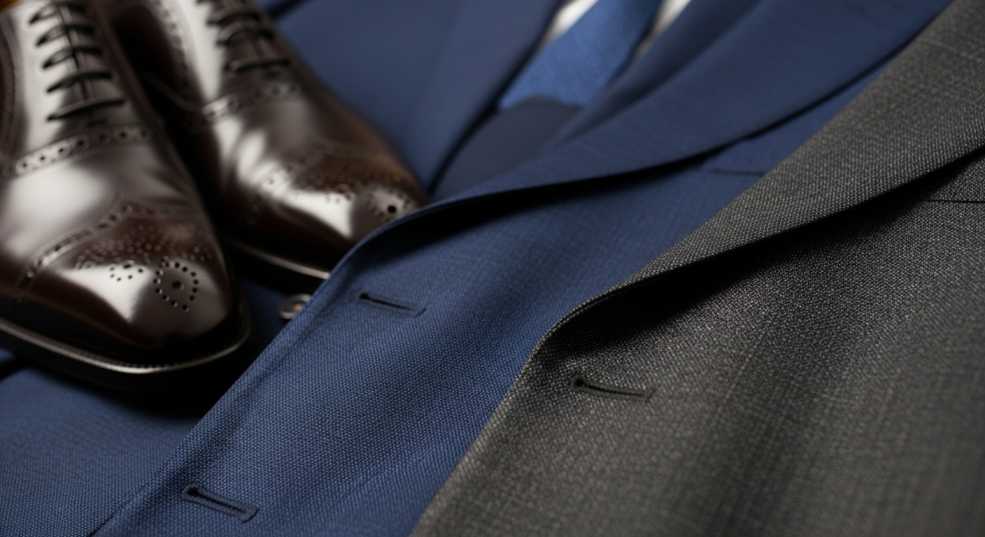
- The Suit: Navy Blue or Dark Gray. Stay away from black. Black suits are only for waiters and funerals. A dark navy suit makes you look smart and trustworthy.
- The fit is more important than the brand. A $2,000 Armani suit that is two sizes too big looks worse than a $200 H&M suit that fits your shoulders. If the sleeves of your jacket cover your hands, you look like a kid wearing dad’s clothes.
- ** The Shirt:** White or light blue that is crisp. Put it on the iron. After that, iron it again. Wrinkles mean you’re not working hard.
- The shoes are made of leather. Wear brown shoes with a navy suit and black shoes with a gray suit. Make them shine. Recruiters who pay attention to details hate it when candidates have scuffed shoes.
3. Business Casual
“Business Casual” is a vague and confusing term, so this is the hardest category. It’s the Goldilocks zone: not too fancy and not too messy.
For Guys:
- The Pant: Chinos or dress pants. Khaki, navy, or olive. No jeans, unless they’re really dark and the company is laid-back. But why take the chance?
- A button-down shirt (tucked in) or a high-quality polo is the best.
- The “Third Piece”: This is the secret weapon. Put a blazer or a nice V-neck sweater on over your shirt. It changes the look from “I work in IT” to “I manage IT” right away.
- Loafers, boots (like Chukkas), or very clean, simple leather sneakers are good shoes to wear if the mood calls for it.
For Women:
- The outfit: a blouse and dress pants or a pencil skirt. A dress that comes to the knee is also a winner.
- The Blazer: A blazer fixes everything, just like it does for men. You can look like a CEO in no time by putting on a simple tee and a blazer.
- Flats, loafers, or low heels are good shoes. You don’t have to wear stilettos that are 6 inches high. You should feel at ease. If you’re wobbling as you walk into the room, you’re not paying attention to your answers.
4. Tech Bro / Creative Vibe
People make mistakes here. They say, “It’s a startup, I can wear anything.”
No.
You can’t wear a hoodie and flip-flops unless you’re Mark Zuckerberg. You haven’t done anything to earn that right yet. You are there to apply for a job.
“Smart Casual” is the goal here. You want to blend in, but you work 10% harder than the people who already work there.
- The Uniform: Dark denim jeans (no holes or fading), a clean, solid-colored t-shirt or button-down shirt, and a cool jacket (bomber, denim, or unstructured blazer).
- The Sneaker Game: Keep it clean. Make sure your Converse aren’t the same ones you wore to a muddy festival three years ago.

5. Zoom Interview
Interviews over the phone are risky. We all do the “Business on top, Pajamas on bottom” thing.
What I think? Don’t.
Put on pants. Pants that are real. Why?
- Mindset: You sit differently when you’re dressed up. You speak in a more professional way. You feel “in the zone.”
- What if you have to stand up to close a blind because the sun is in your eyes? Or get a charger? Your interview is over if you stand up and show off your Spongebob boxer shorts.
Colors are also important on camera. Stay away from bright white because it glows on camera and makes the exposure wrong. Stay away from small, complicated patterns because they make webcams look like they’re strobing. Use solid, muted colors like blue, green, or gray.
Others: Interview की तैयारी कैसे करें, घबराहट को ‘कॉन्फिडेंस’ में बदलने का फॉर्मूला
6. Stuff Nobody Talks About But Matters
- Scent: Don’t wear perfume or cologne. Don’t do it. You might think you smell like a beautiful pine forest, but the interviewer in a small, stuffy room might think you smell like a chemical spill. The smell of clean soap is all you need.
- Accessories: Don’t go overboard. You don’t want your bracelets to hit the table every time you move your hands. It’s a pain.
- Hair: If you have long hair, keep it out of your face. If you keep brushing your hair back during the interview, it makes you look nervous.
- The Bag: Don’t bring your gym bag. Bring a structured bag or a simple leather portfolio to hold your resumes.
Final Thoughts
Before you go, look in the mirror and ask yourself, “Do I feel like myself?”
It will show if you feel like you’re in a costume. You’ll be fidgeting, fixing your collar, and looking uncomfortable.
It’s better to be a little underdressed and comfortable than to be overdressed and sweating nervously. I know this sounds cheesy, but it’s true: confidence is the best accessory.
FAQs
Q: Is it okay to wear jeans to an interview? Like, never?
A: Only if you are 100% sure the office is laid-back, like a tech startup or a creative agency. They still need to be dark wash, slim fit, and have no holes. Burn them if they look like the jeans you wear to paint your house. If you are going to a bank or a hospital for an interview? No way.
Q: What’s wrong with a black suit? I thought black was classy.
A: Black is formal, but it’s “funeral” formal or “tuxedo” formal. A black suit looks harsh and cheap in a bright office. Navy blue or charcoal gray will make you look softer and more trustworthy instead of harsh. Also, if the interview is during lunch, you don’t want to be confused with the waiter.
Q: Is it really okay to ask the recruiter what to wear? I won’t look dumb, will I?
A: No, you’ll look ready. It shows that you want to fit in with the company’s way of doing things. Send a quick email saying, “I want to make sure I fit in with the team. Is the dress code for work every day business casual or business professional?” They will be grateful that you asked.
Q: I have a job interview on Zoom. Can I just wear a nice shirt and some sweatpants?
A: Yes, but it’s a risk. If you have to get up to close a blind, get a charger, or let your cat out, your future boss will see your pajama bottoms. It’s hard to get rid of that picture. Put on the pants. It helps your brain get ready to work.
Q: What did you mean by the “Third Piece” rule?
A: It’s a trick of the trade. Your pants are the first piece. Piece 2 is your shirt. You look normal if you stop there. A jacket, blazer, cardigan, or even a really nice sweater can be the “third piece.” The outfit looks “finished” and planned instead of basic when you add that third layer.
Q: Do I need to cover up my tattoos?
A: It matters less than it used to in 2026, but it depends on the field. Creative and tech? Usually good. Law, money, or government? Put them away for the first interview. It’s best to be safe, get the job offer, and then ask about the tattoo policy.